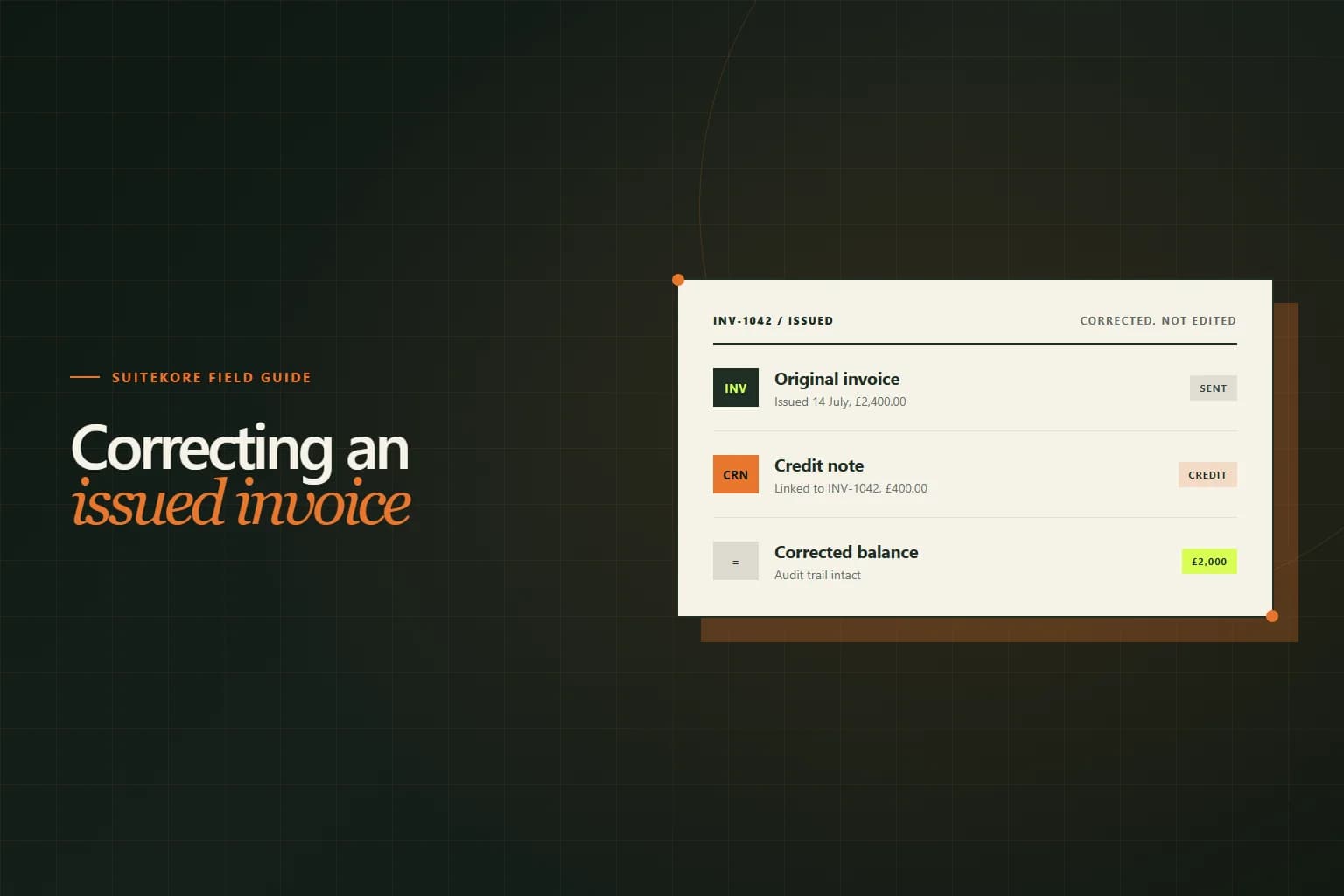
You have sent an invoice and something on it is wrong. The price was overstated, a line was billed twice, or the client returned part of the work. The instinct is to open the invoice and fix the number. Do not. An issued invoice is a business record rather than a draft, and the correct instrument for changing one is a credit note. This guide covers what a credit note does, when to raise one, what it has to show, and how partial credits, VAT and refunds fit together.
What a credit note actually does
A credit note reduces or cancels the amount owed on an invoice you have already issued. It is a document in its own right, with its own number, linked to the invoice it corrects. Critically, it is never itself payable. Nobody pays a credit note; it changes what is payable on something else.
That linkage is the whole point. Anyone reading your records later, including you in eleven months, can see the original charge, the correction and the reason for it as three connected facts rather than one figure that quietly changed.
When to raise one instead of editing
The dividing line is whether the invoice has left your hands. A draft can be edited freely because nobody has relied on it. Once it has been sent, the client has a copy, and editing yours means two documents carry the same number and different totals. If they have already entered it into their system, your correction will not reach them at all.
Raise a credit note when any of the following is true after sending.
- The amount was overstated, or a line was billed twice.
- Work was cancelled, returned or never delivered.
- You agreed a discount or goodwill reduction after issuing.
- The invoice went to the wrong customer entirely.
For the last case, credit the invoice in full and issue a fresh one to the correct customer, rather than trying to reassign the original. The invoice status workflow from draft to paid sets out which states can still be changed and which cannot.
What a credit note has to show
A credit note carries most of the same content as the invoice it corrects, which is what makes it readable next to it. Show the words credit note, its own unique number, the date, your business and customer details, and the number and date of the original invoice. Then show what is being credited, as line items rather than a single lump, with the VAT treatment matching the original.
The underlying content rules mirror those in what to include on an invoice in the UK. Add one field an invoice does not need: the reason for the credit. A single line saying "second site visit billed in error" prevents the conversation that otherwise happens at year end.
Partial credits and the VAT position
Most credit notes are partial. If you billed £2,400 and £400 of it was wrong, credit the £400 rather than cancelling the invoice and reissuing it at £2,000. The client keeps the invoice they already approved, and the correction is visible as a correction.
Where you are VAT registered, the credit note has to reverse VAT at the same rate applied on the original invoice, even if rates have since changed, because it is correcting that supply rather than making a new one. Both documents belong in the same VAT period records. Rates and rules change, so confirm the current position on GOV.UK or with your accountant before relying on any summary, including this one.
Credit note or refund
These are different actions and businesses conflate them constantly. A credit note adjusts what is owed on paper. A refund moves money back to the customer. Which you need depends on whether the invoice has been paid.
If the invoice is unpaid, a credit note alone is usually enough: it reduces the balance and the client pays the corrected amount. If the invoice has already been paid, you need the credit note and then a decision about the money, either a refund or a credit carried against their next invoice. Agree which one explicitly, because a client expecting cash back while you are holding a credit on account is a dispute waiting for month end.
Keeping the trail readable
Credit notes need their own unbroken number series, separate from invoices, for the same reason invoices do. A gap invites a question you then answer from memory, which is covered in setting up an invoice numbering system that scales.
Never delete a credit note either. If one is raised in error, credit the credit by issuing a corrected invoice, and let the sequence tell the story. The wider process this sits inside is set out in the complete guide to invoicing for UK service businesses.