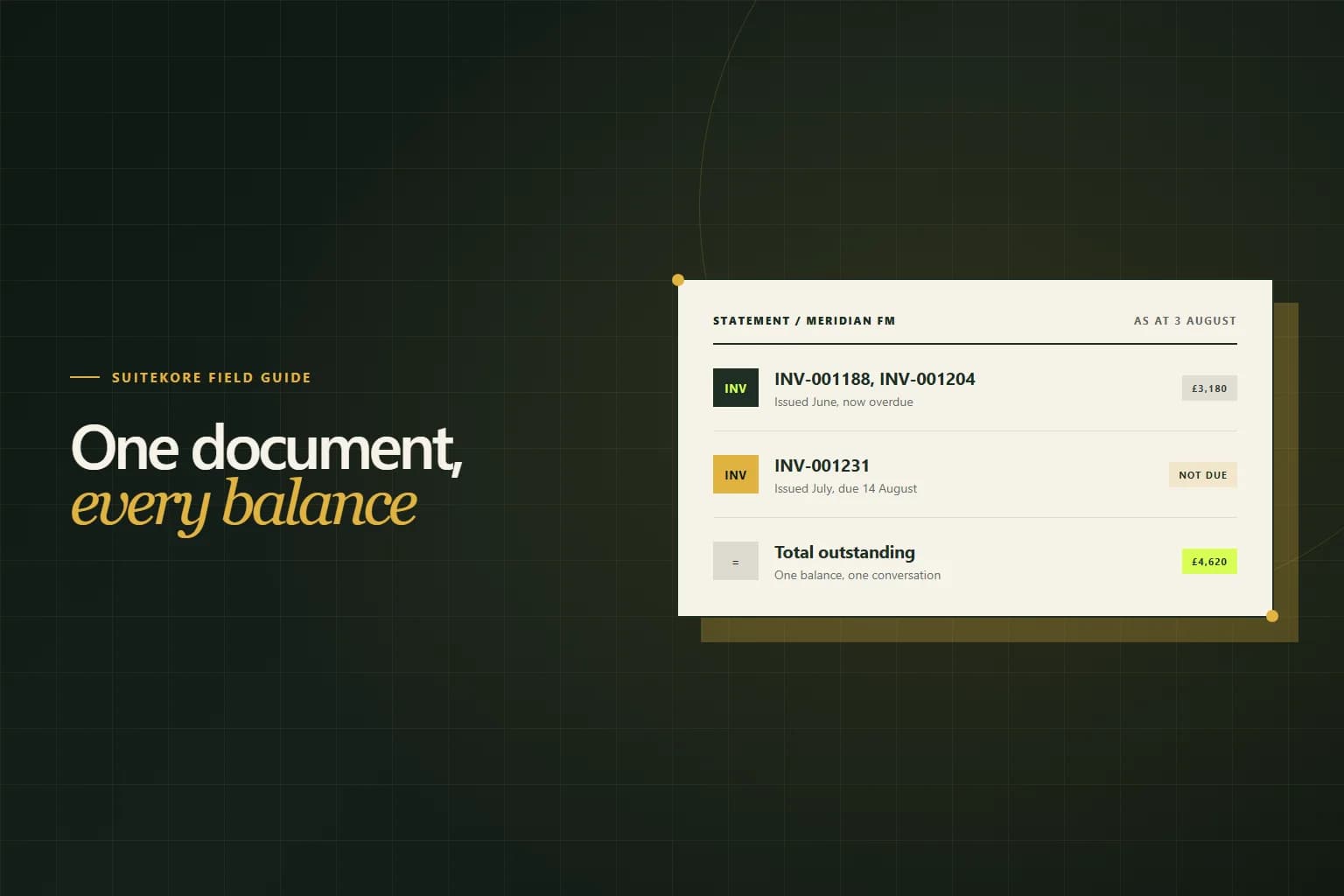
A client owes you for four invoices. Two are badly overdue, one is due next week, and one they insist they never received. Sending a fifth reminder about a single invoice number will not resolve that, because the two of you are no longer arguing about an invoice. You are disagreeing about a balance. A statement of account is the document that puts the whole position in front of them at once, and it usually ends the argument faster than any reminder does.
What a statement of account is
A statement of account summarises everything a customer currently owes you, as at a given date. It lists each open invoice with its number, date and amount, and gives one total outstanding at the bottom. It is a position summary, not a demand.
That distinction matters more than it sounds. A statement does not replace the invoices it lists, does not create a new debt, and does not take a number from your invoice sequence. It is a covering document that helps two sets of records agree with each other.
Statement or invoice, and why it matters
An invoice charges for one specific piece of work and creates a debt with its own due date. A statement reports on several invoices at once. Clients pay against invoices, never against statements, which is why a statement should always carry enough invoice detail for them to act on it.
Get this wrong and you create work for yourself. A statement sent without invoice numbers gives an accounts department a total they cannot match to anything in their system, and the reply is a request for the underlying invoices, which is exactly the delay you were trying to avoid. The content rules for the documents themselves are in what to include on an invoice in the UK.
When a statement is the right move
A statement earns its place when the number of open invoices is itself the problem. Specific situations where it beats another reminder:
- The client has three or more invoices open at the same time.
- Payments have arrived but you cannot tell which invoices they settled.
- The client says they have paid everything and your records disagree.
- A new finance contact has taken over and inherited no history.
- You are approaching a quarter or year end and want positions agreed.
Where the client has one unpaid invoice, skip it. A statement listing a single line is a reminder with extra steps, and the timed follow-up sequence in the complete guide to invoicing for UK service businesses does that job better.
What a useful statement shows
Every open invoice needs its number, issue date, due date and amount, so each line can be matched against the client ledger without a phone call. Show the total outstanding prominently, and separate what is genuinely overdue from what is not yet due, because collapsing the two into one number invites a dispute about the whole balance when only part of it is late.
Include payments already received in the period. A statement that only lists debts reads as adversarial and, worse, gives the client no way to check whether the payment they made last week has landed. Make it easy to act on: a statement the client can open online, alongside the PDF, removes the step where somebody has to find an email attachment from three weeks ago.
Using it to settle a disagreement
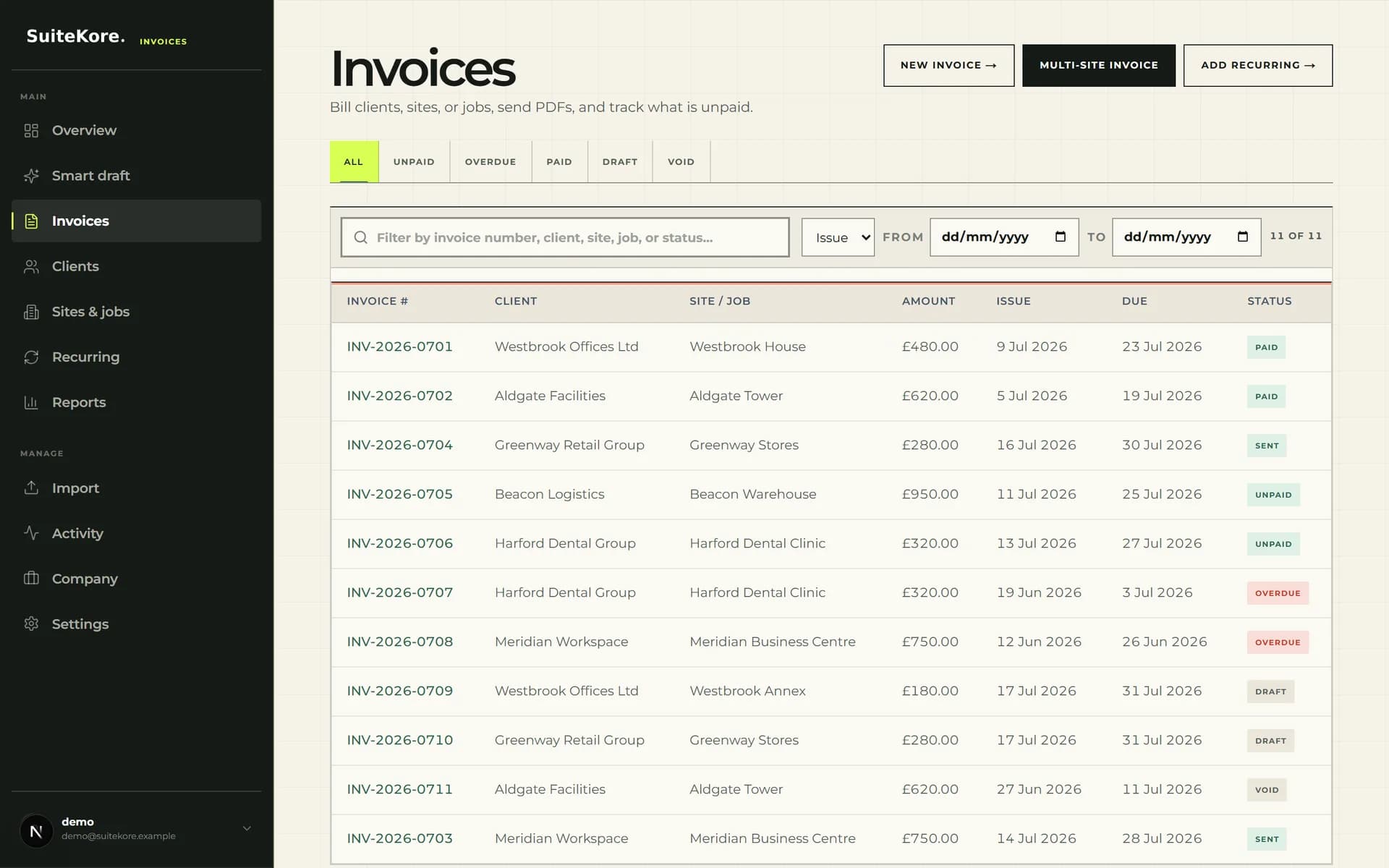
The most valuable use of a statement is not chasing at all. It is reconciliation. When a client believes they are up to date and you believe they owe you £4,600, one of you has a record the other cannot see. Sending the statement moves the conversation from assertion to evidence, and in practice most of these disputes resolve into one of three things: an invoice that never arrived, a payment applied to the wrong invoice, or a credit that was agreed verbally and never documented.
The third one is worth fixing properly rather than adjusting the statement. Raise a credit note against the original invoice so the correction is visible in both sets of records rather than living in an email.
Making it a monthly routine
Statements work best as a habit rather than an escalation. Send them on the same day each month, shortly after your billing run, to every client carrying more than one open invoice. Sent routinely, a statement is administrative and nobody takes offence at it. Sent only when you are annoyed, the same document reads as a threat.
That rhythm pairs with the six steps in how to deal with late payment of invoices: statements keep the overall position agreed, while reminders chase specific invoices. Doing both, on a schedule, removes most of the guesswork from collection.