
Learning how to invoice electrical work clearly starts with preserving the original scope, recording approved changes separately and making the final bill traceable to both. The current Suitekore invoice features include variations, progress billing, invoice records and payment status. This matters when a call-out grows into remedial work or the client requests extras.
Keep the original job scope visible
Begin with a clear description of what the customer accepted: location, task, included labour, major materials, exclusions and price basis. The eventual invoice should use the same language where practical. That continuity helps the customer recognise the work rather than decode a new description after completion.
For a call-out, distinguish the attendance charge from further diagnosis or remedial work. For a quoted job, retain the accepted quote as the baseline. Avoid a single vague line such as “electrical works”, especially when several visits or parts contributed to the total. The guide to quote vs invoice sets out what each document commits you to. Where the work is billed on hours rather than an agreed price, time and materials invoicing covers how to record and describe those hours so they are approved without query.
- Customer and service address
- Accepted task or quote reference
- Labour and material description
- Known exclusions
- Payment terms and due date
Record scope changes before they reach the invoice
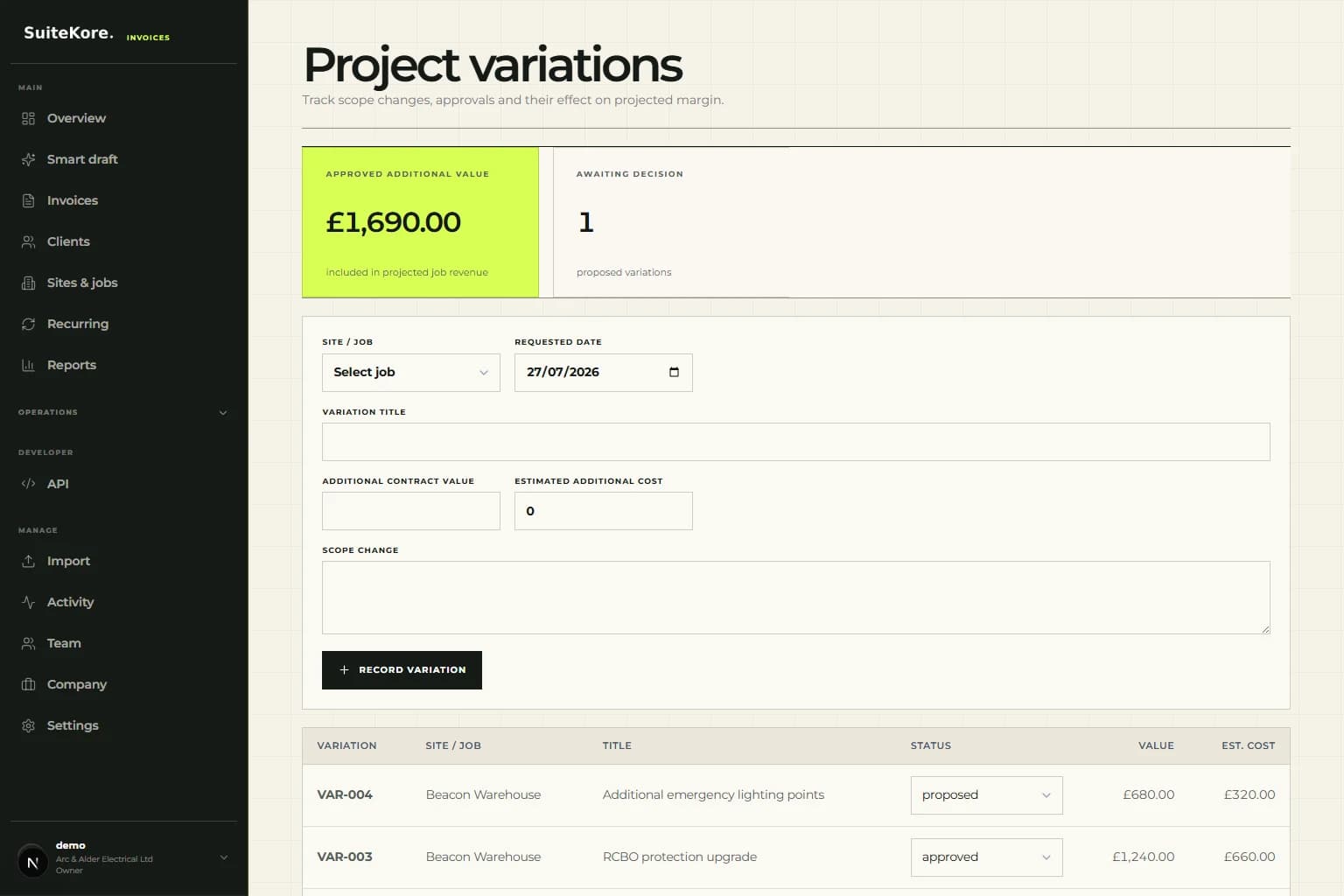
When the site condition changes or the customer requests extra work, create a separate variation record. Describe the change, its additional value, estimated cost and approval status. A proposed item should not quietly appear as though it formed part of the original agreement. The invoice software for electricians guide places this control inside the wider job-to-payment workflow.
Keep the approval evidence with the job record and use a consistent variation number. This gives the office a dependable bridge between the engineer’s site note, the customer’s decision and the later invoice line.
Choose the right billing point for the job
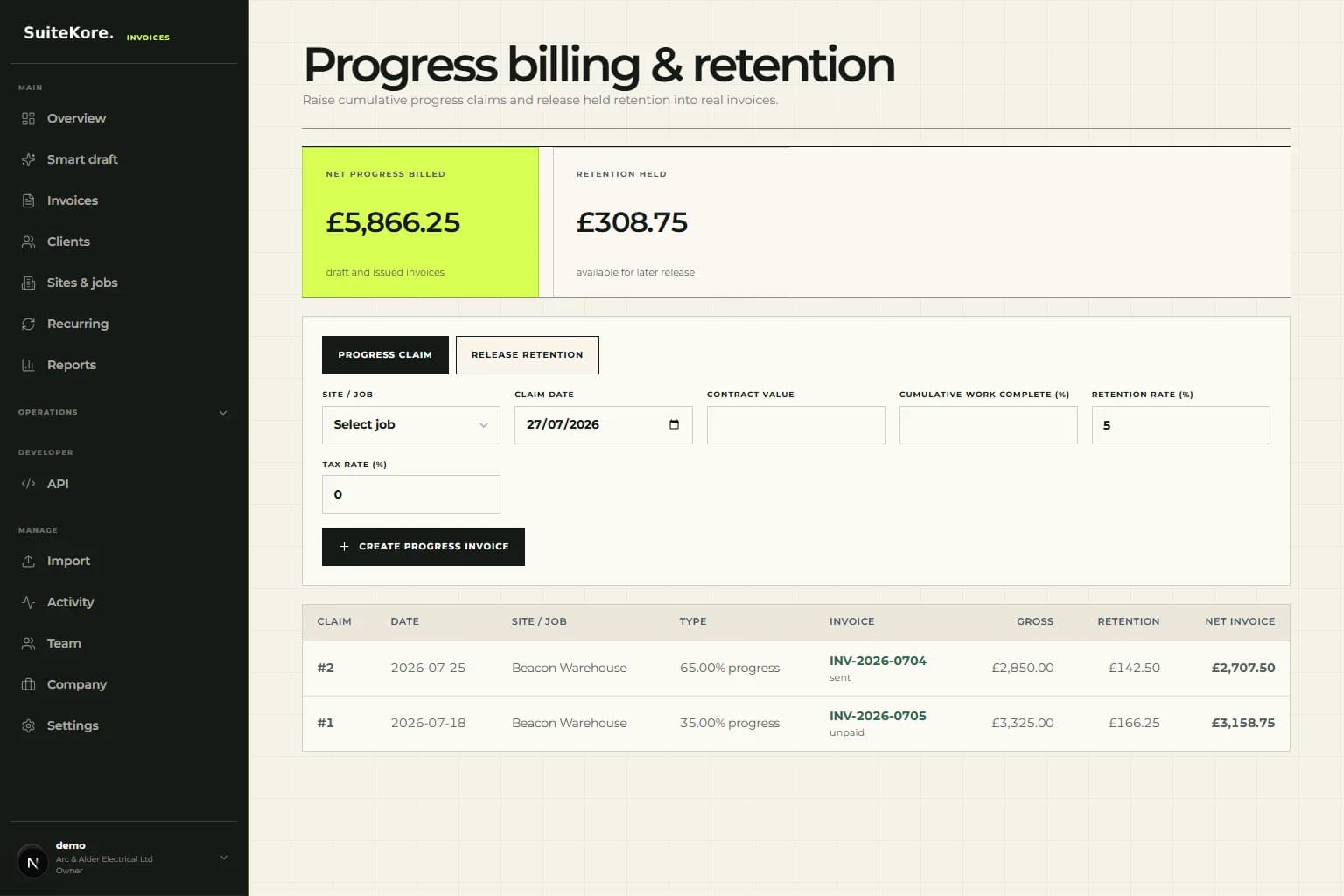
A short repair may need one invoice after completion. A larger installation may use staged or progress billing agreed in advance. If the business uses a deposit, progress claim or retention arrangement, state the basis clearly and show what has already been billed so the customer can understand the remaining amount.
Do not invent a stage merely to improve cash flow after work begins. The billing structure should follow the accepted terms. For cumulative claims, check contract value, progress to date, previous claims, retention and the net amount requested. See the current product demo before mapping this to staged work.
Build a final invoice the customer can reconcile
Bring the baseline work and approved extras together without blurring them. Use separate lines for the original job, each authorised variation and any agreed credit. Include the correct service address, invoice date, due date, payment terms, purchase-order reference where required and VAT treatment.
Review descriptions from the customer’s point of view. Product codes alone rarely explain why the amount changed. A concise line such as “additional emergency lighting points, approved variation VAR-004” is easier to reconcile than an unexplained parts total.
- Match the accepted scope
- Reference approved variations
- Show prior billed amounts where relevant
- Check totals, tax and payment terms
- Preview the PDF before sending
Standardise the handover from site to office
The office cannot bill an approved extra it never receives. Ask engineers to report the job reference, visit date, work completed, materials used, approved change and any remaining task in one consistent handover. Photographs and certificates may support the job record, but the invoice still needs a concise commercial description.
Set a clear cut-off for the weekly invoice run and identify who resolves missing information. If approval is unclear, hold that line for review instead of guessing. This protects the customer relationship and prevents the final invoice from becoming the first place a scope change is mentioned.
Close the loop after sending
Track whether the invoice remains a draft, has been sent, is overdue or has been paid. If a client queries a balance, the job scope and variation record should let the office answer without rebuilding the history from emails and engineer messages. The invoice status workflow provides a practical queue from draft through to recorded payment.
Record full or partial receipts against the correct invoice. Review outstanding electrical work at a fixed weekly point, follow up based on the due date and keep disputed amounts distinct from undisputed balances.
Use this workflow to support the wider software decision
The broader invoice software for electricians guide explains the full path from completed work to a trackable payment. This supporting article goes deeper on a common operational problem: keeping an invoice accurate when the work changes between attendance and completion.
Test any system with representative cases before adopting it: one simple call-out, one quoted installation with an approved extra and one staged job. The useful result is not just a polished PDF; it is a record that makes the final amount understandable to the customer and the office.