 01
01How often should you invoice?
Billing frequency is the cash flow decision most small businesses never actually make. They inherit whatever they did on the first job and keep doing it.
How the work actually moves through your business. These guides cover the operational side of billing: what each invoice status should mean and who acts on it, how to handle work that changed after it was quoted, how to run a monthly billing cycle across many sites, and how to turn a plain-English brief into a structured draft.
12 guides in this category
Useful once the basics are settled and the bottleneck has moved from writing invoices to managing them.
01Billing frequency is the cash flow decision most small businesses never actually make. They inherit whatever they did on the first job and keep doing it.
 02
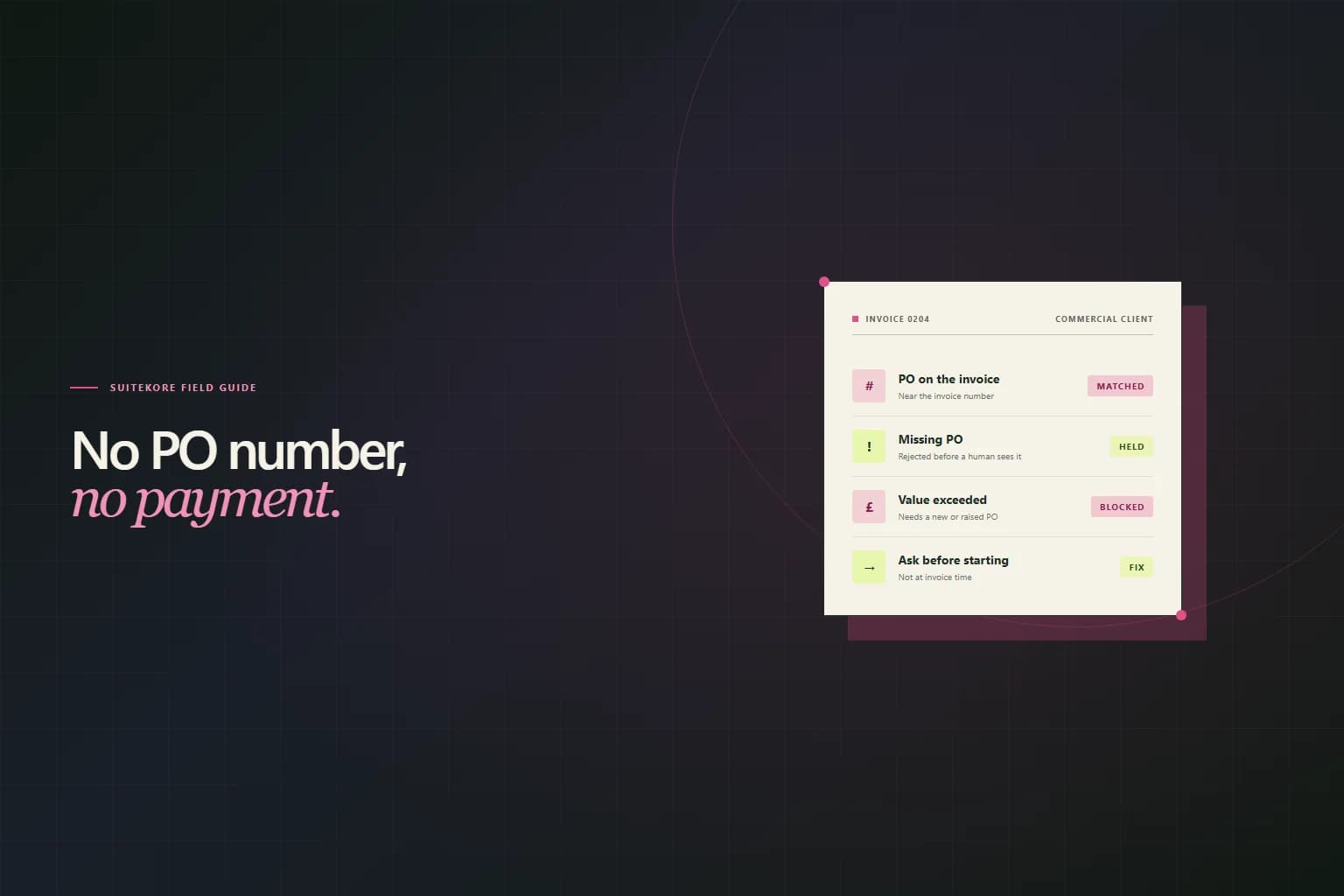
02A commercial invoice without a purchase order number is usually rejected by software before a person ever reads it. Nobody tells you. It just does not get paid.
 03
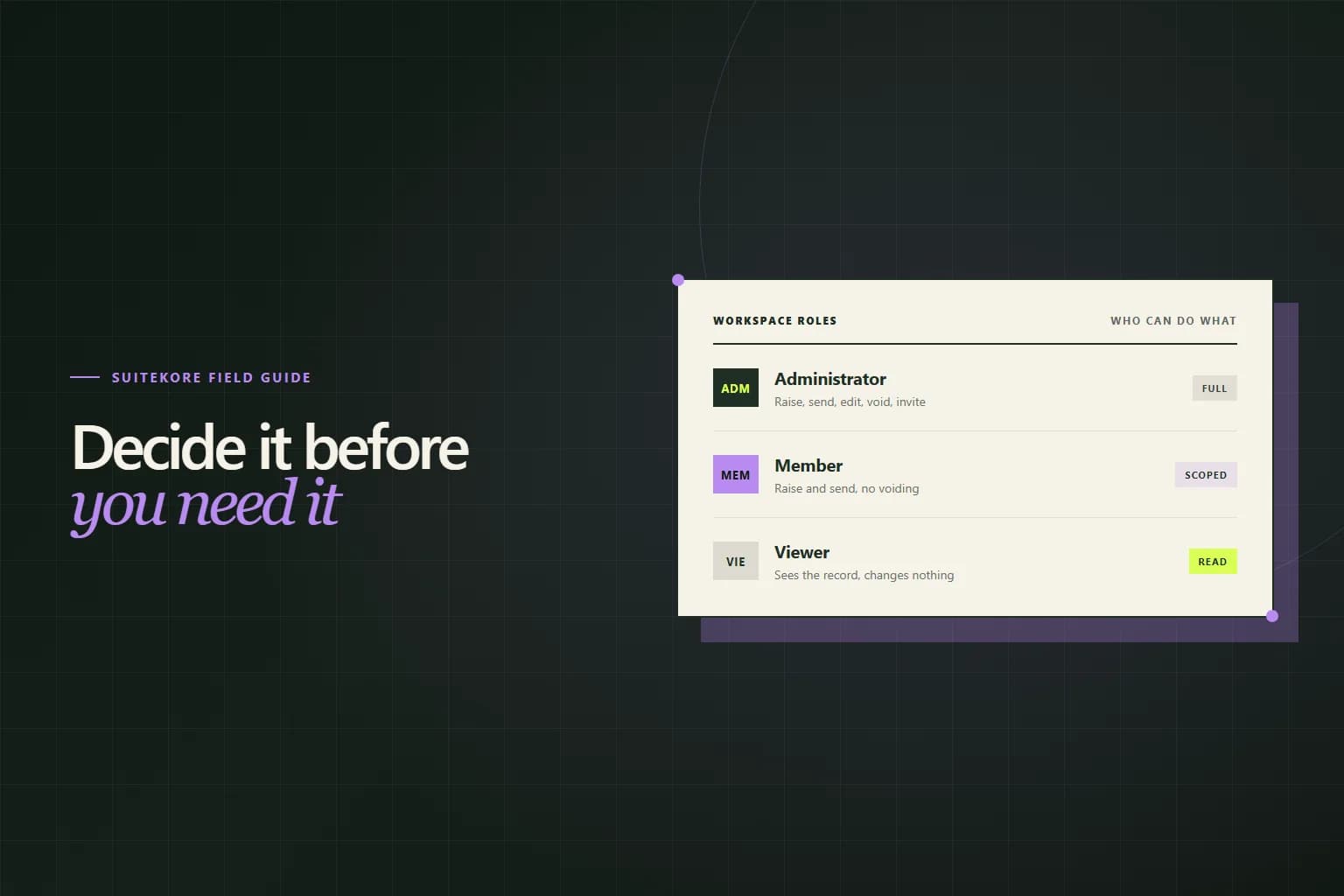
03The second person who can send invoices is the moment billing becomes a process rather than a habit. Deciding the rules early costs nothing.
 04
04Two systems holding the same invoices will disagree eventually. What should flow between them, in which direction, and what you still have to check yourself.
 05
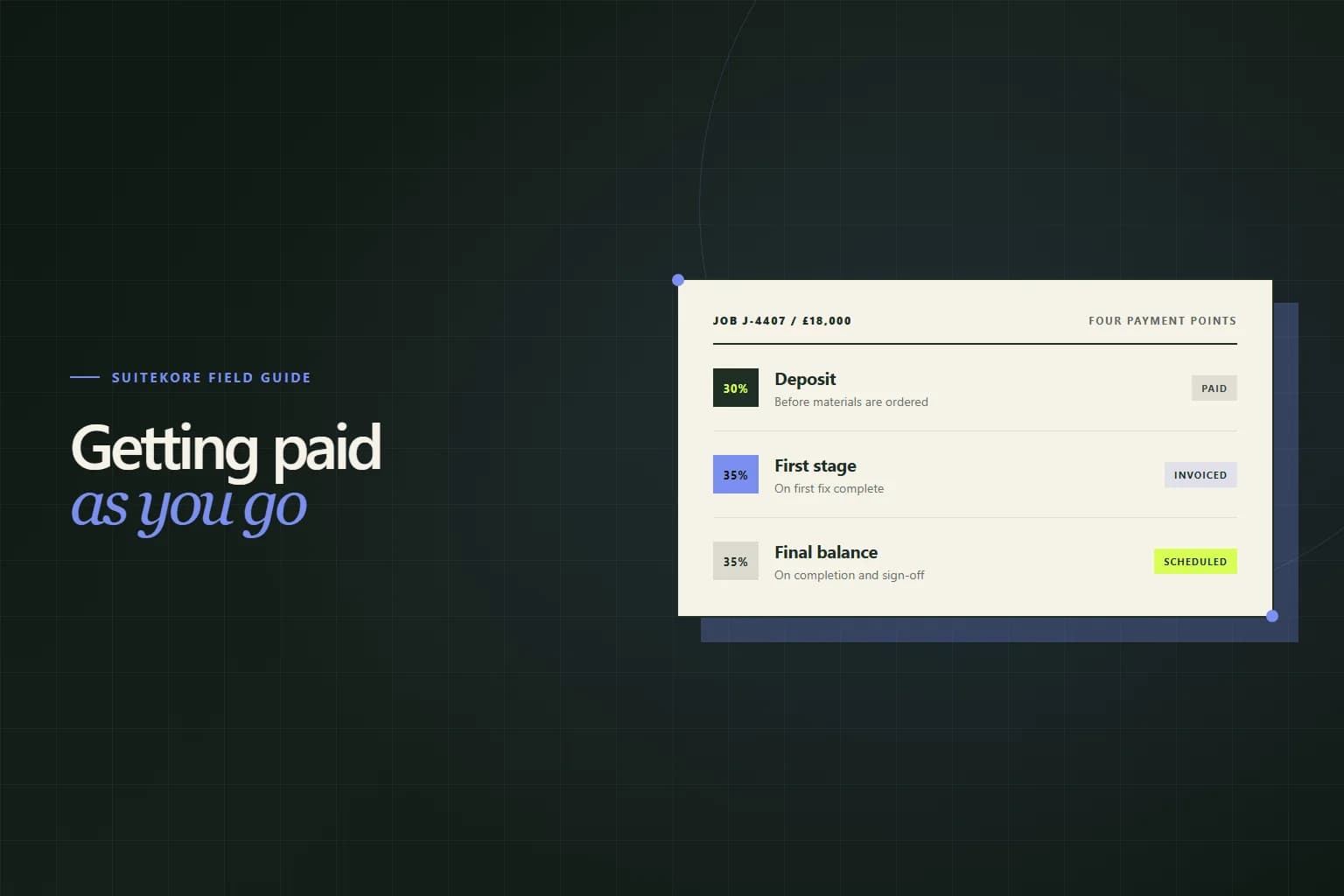
05On a long job, waiting until completion means funding your client for months. Deposits and stage payments move the risk back where it belongs.
 06
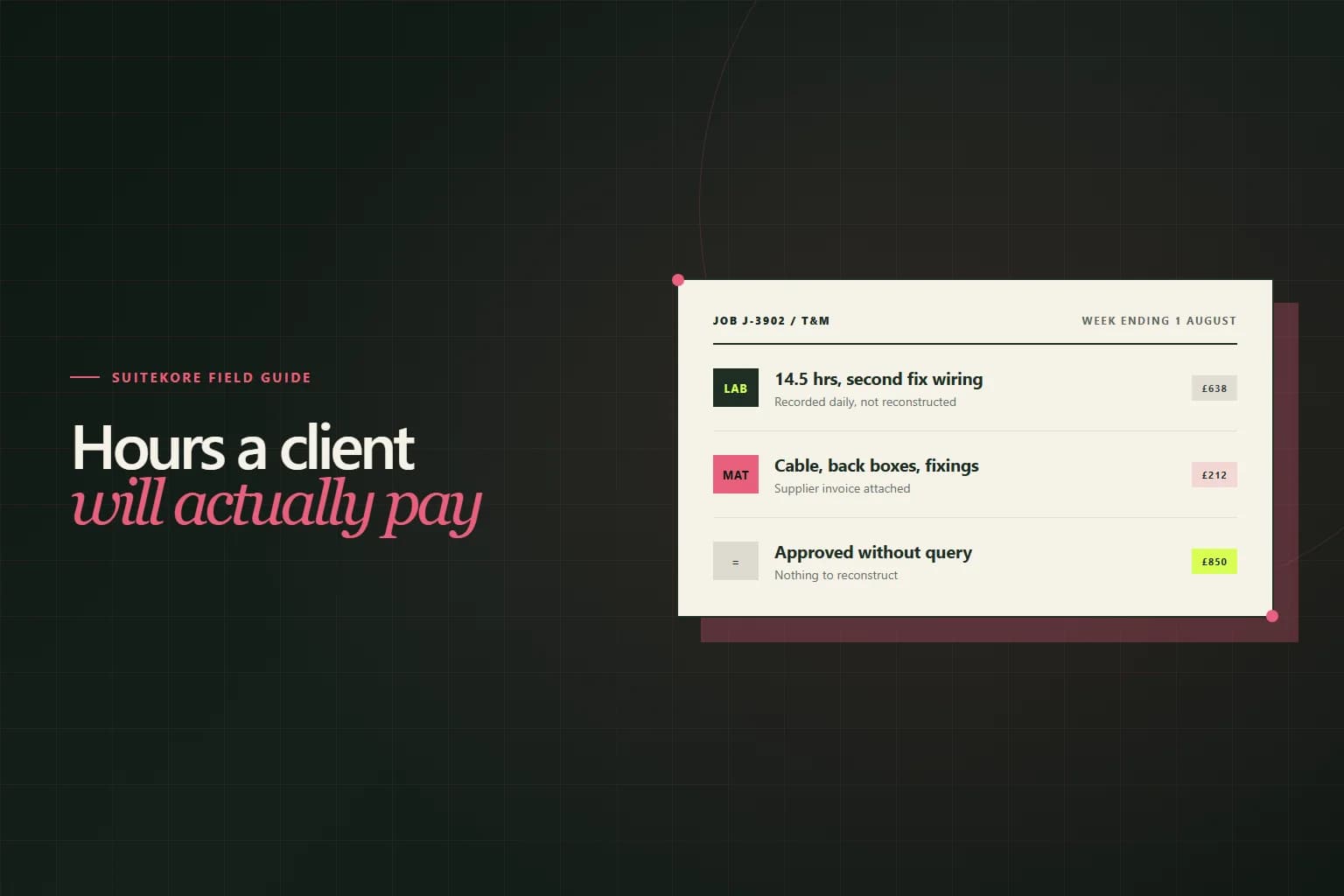
06Time and materials billing fails at the description, not the arithmetic. What a client needs to see before they will approve hours they did not personally watch.
 07
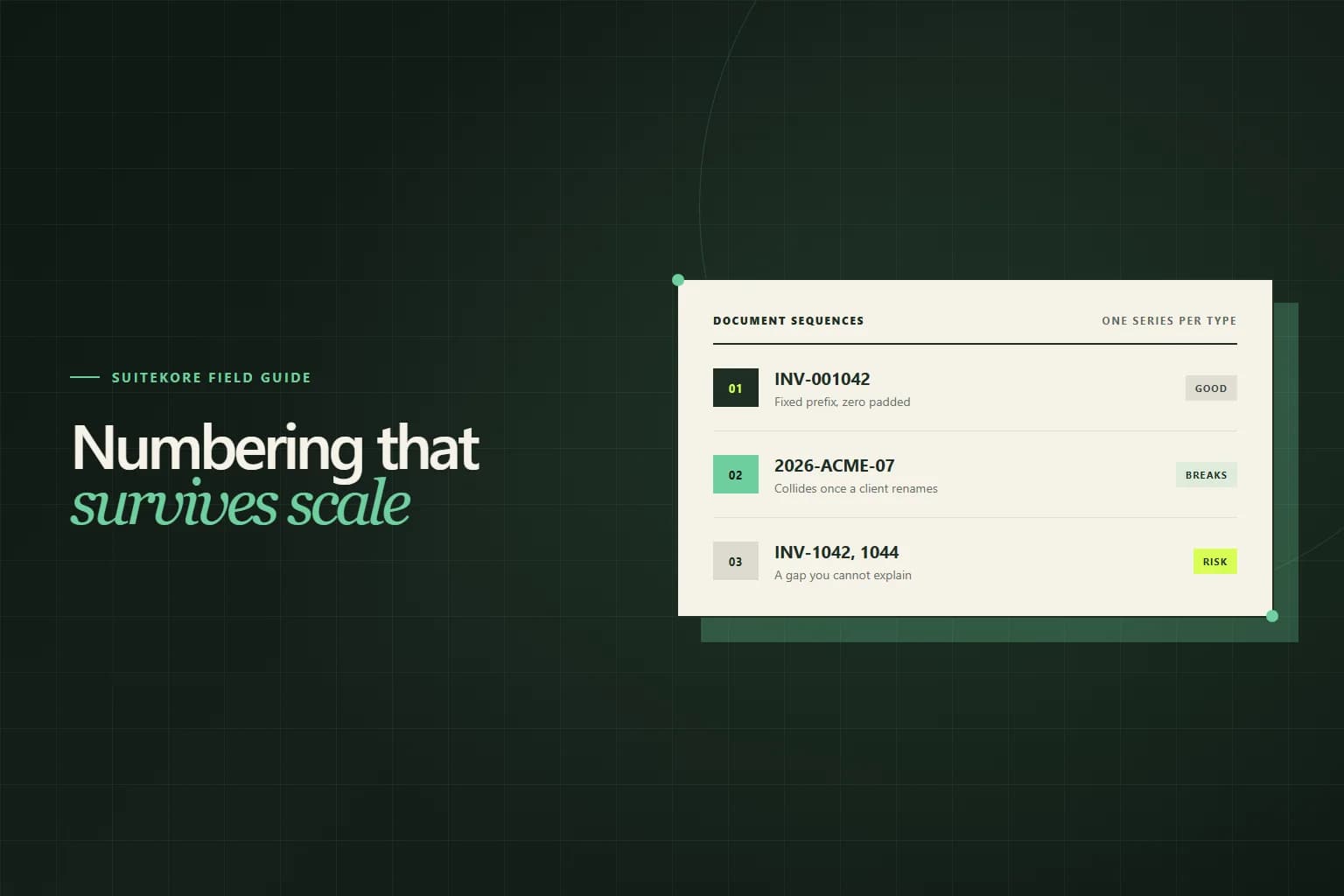
07Most numbering schemes look tidy for a year and then collide. What separates the ones that survive from the ones you have to migrate away from.
 08
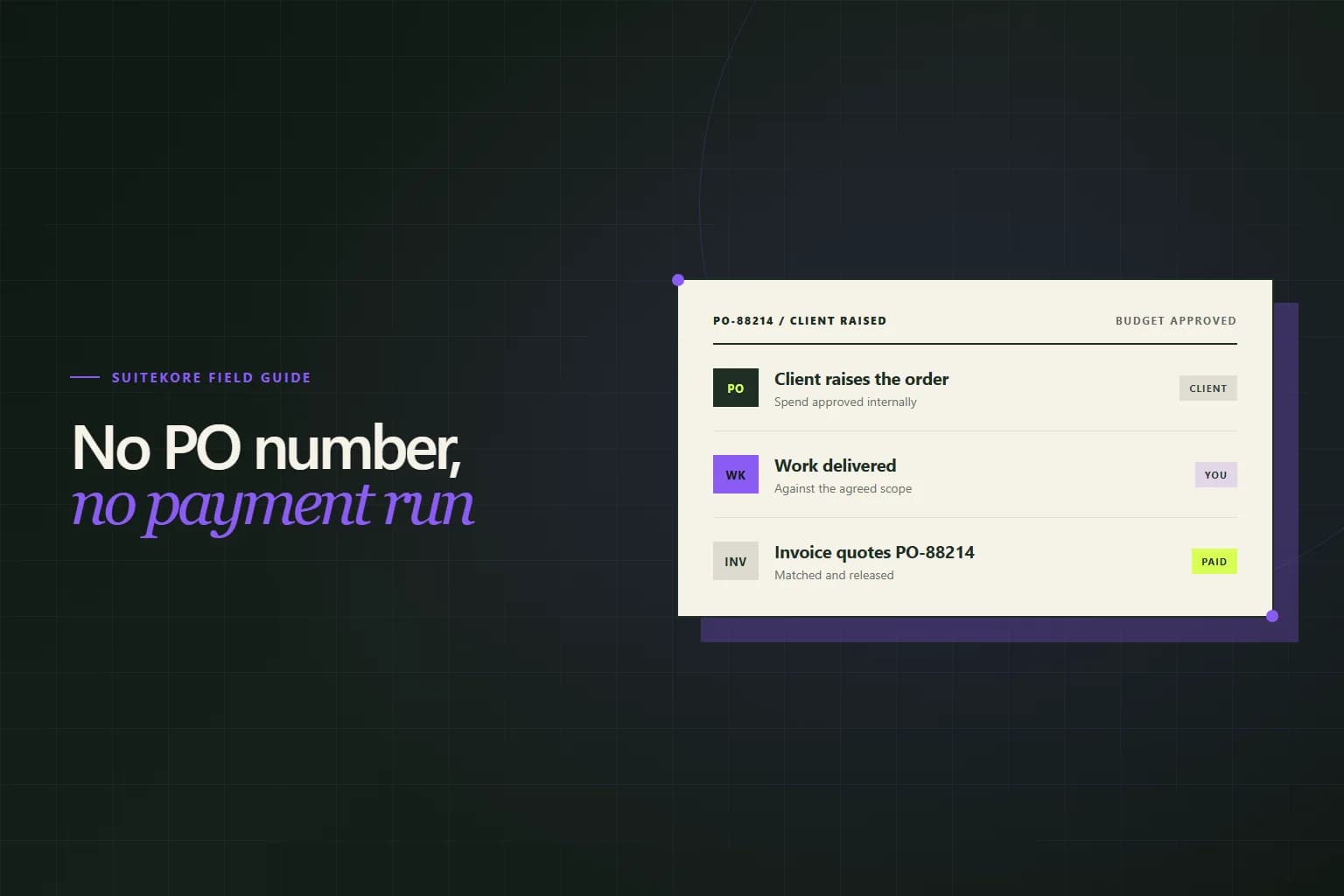
08A purchase order is the client giving themselves permission to spend. Without its number on your invoice, their own system will not let them pay you.
 09
09Keep the original electrical scope, approved extras and final invoice aligned when a straightforward job changes on site.
 10
10Turn repeat cleaning contracts into a controlled monthly billing run without rebuilding invoices or losing one-off work.
 11
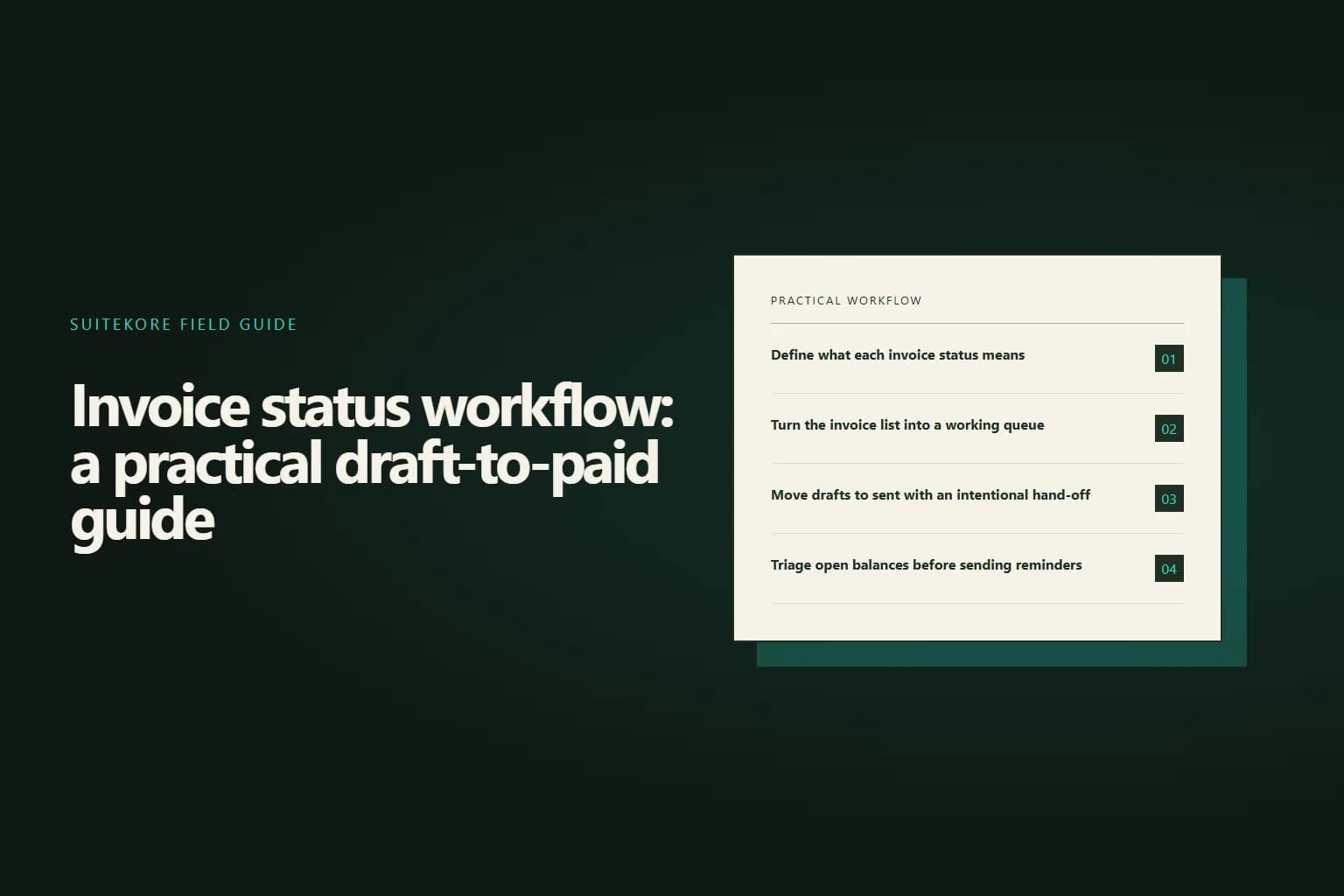
11A practical guide to assigning clear actions to draft, sent, unpaid, overdue, paid and void invoice states, with a weekly control routine.
 12
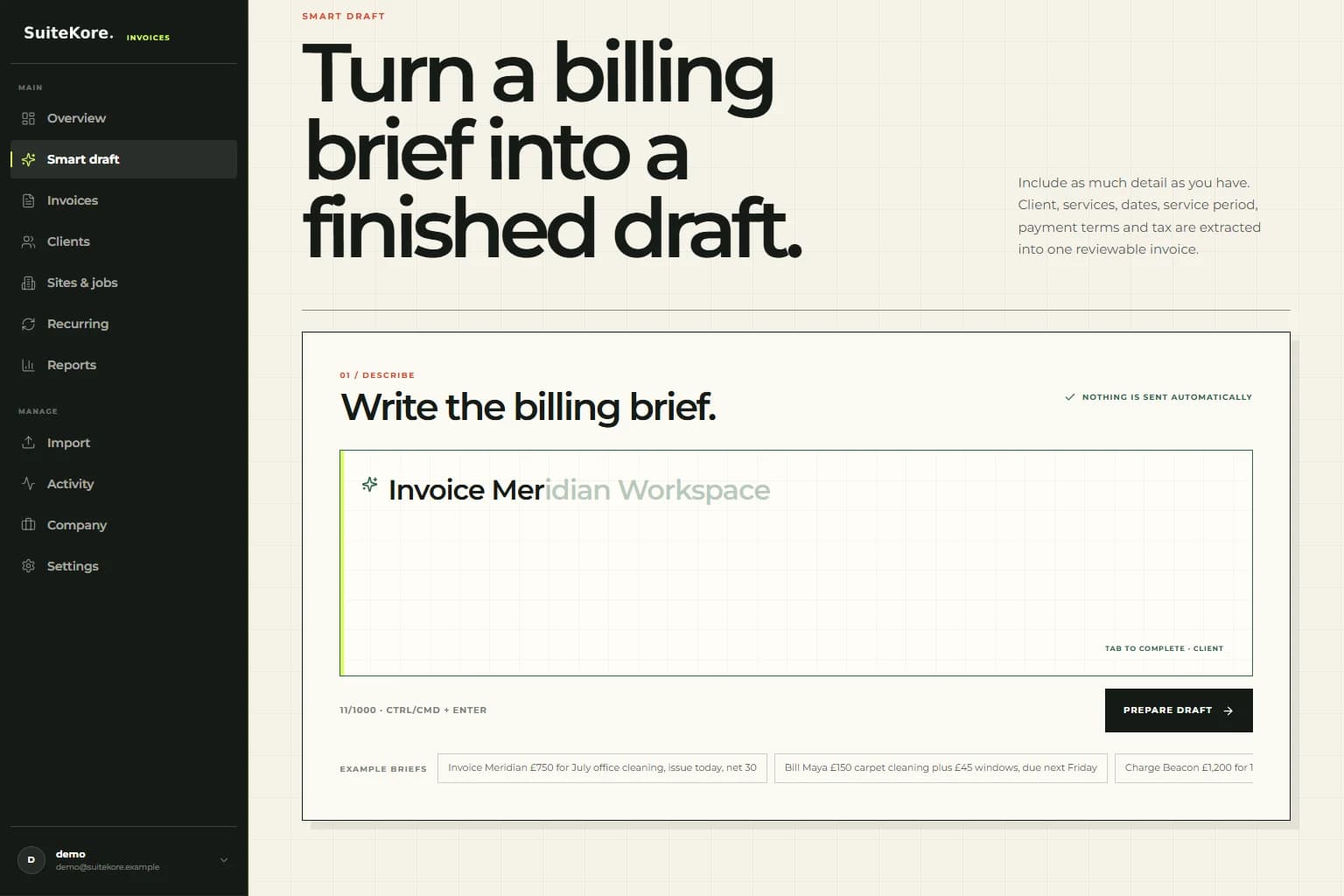
12A practical look at turning one sentence into a structured invoice draft—complete with saved clients, service dates, payment terms, VAT, and a final review.