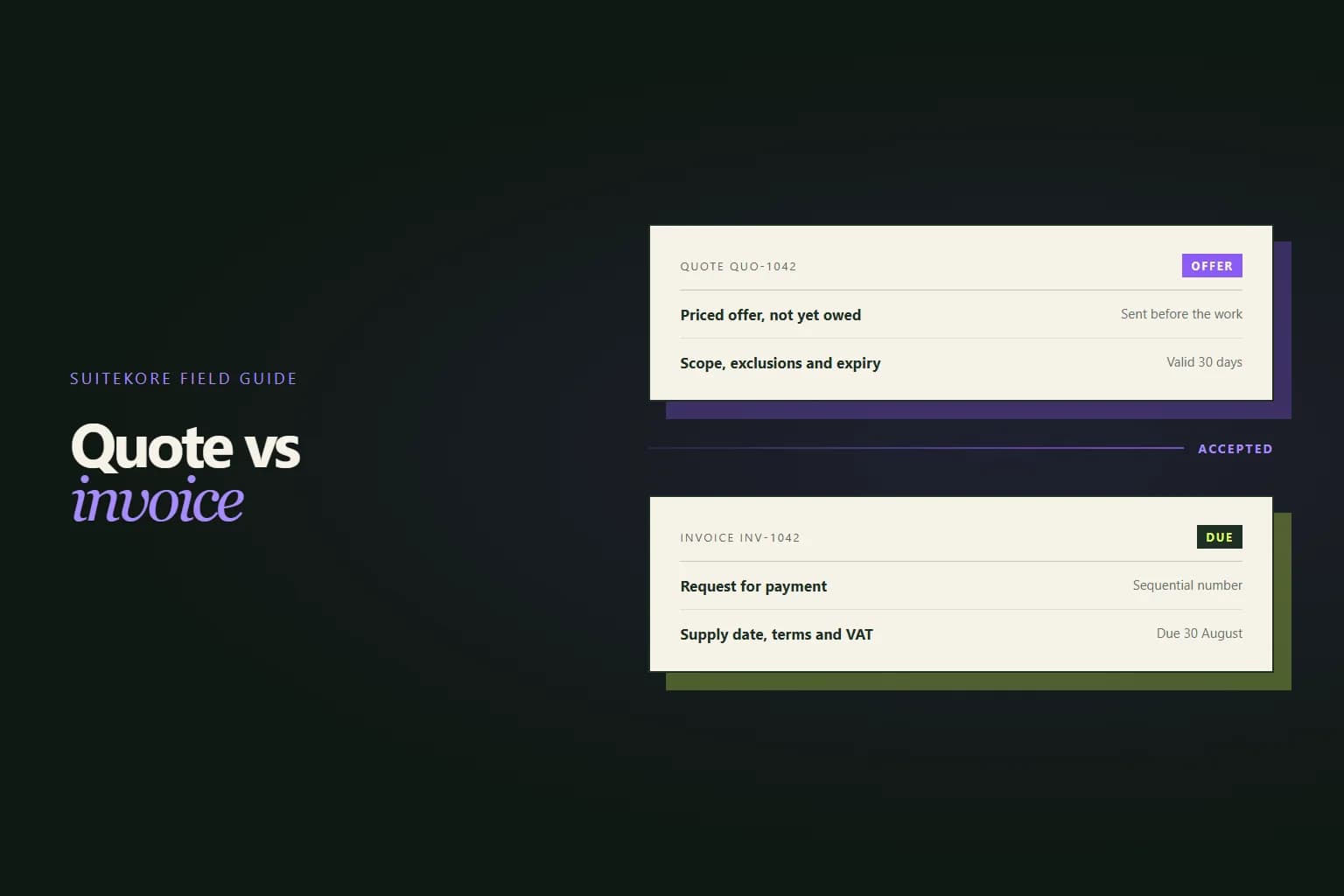
A quote is a priced offer to do work. An invoice is a request for payment for work already supplied. Treating one as the other costs money in both directions: an invoice sent before anything was agreed gets queried, and a quote left to act as a bill never gets chased. This guide covers the difference between a quote and an invoice, what belongs on each, and how one becomes the other. The free Suitekore invoice generator produces the second half of that pair.
What a quote is and what it commits you to
A quote sets out the work you propose to carry out and the price you propose to charge for it. It is an offer. Until the customer accepts it, nothing is owed and neither side is committed. Once they accept it, a quote usually becomes a binding agreement to do that work at that price, which is why the wording matters far more than the layout.
A quote is not the same as an estimate. An estimate is an informed figure you expect to move as the job becomes clearer. A quote is a fixed price. If the scope is still vague, issue an estimate and say plainly what would change the number, rather than issuing a quote you will have to walk back later.
There is a third document that sits between the two. A pro forma invoice previews the bill after the work is agreed but before it is billable, which is what some clients need before they can release funds.
What an invoice is and when to send it
An invoice is a formal request for payment for work already supplied or goods already delivered. It creates a debt with a due date, enters your sales records, and is the document an accounts department needs before it can release money. It also has to satisfy content rules that a quote does not. The checklist in what to include on an invoice in the UK sets those out in full, including the unique sequential number, the supply date and the VAT position if you are registered. If you bill under your own name, the guide to invoicing as a sole trader covers the extra naming and address details that apply.
Send the invoice when the agreed trigger is met: completion for most one-off jobs, or a stage or calendar date set out in the quote for longer work.
Quote vs invoice at a glance
- Purpose: a quote offers a price, an invoice requests payment.
- Timing: a quote comes before the work, an invoice comes after the work or at an agreed stage.
- Obligation: a quote creates no debt, an invoice creates a debt with a due date.
- Numbering: quote references are for your own tracking, invoice numbers have to be unique and sequential.
- VAT: a quote shows VAT for information, a VAT invoice has to meet the required content rules.
- Correcting it: an unaccepted quote can be revised or withdrawn, an issued invoice is corrected with a credit note rather than edited.
What to put on a quote so it holds up
Describe the work in the same detail you would use on the final invoice. A quote that reads "external repairs, £2,400" gives you nothing to point at when the customer expects more than you priced. Name the work, then state what is excluded, because exclusions prevent more disputes than inclusions do.
Add the price and whether it includes VAT, how long the quote stays open, what happens if the scope changes, and the payment terms that will apply once you invoice. An expiry date earns its place: material and labour costs move, and an open-ended quote accepted four months later is a job priced at rates that have since moved.
Turning an accepted quote into an invoice
Do not retype it. Rebuilding the figures by hand is where prices drift and lines go missing, so keep the accepted quote as the source and let the invoice inherit from it.
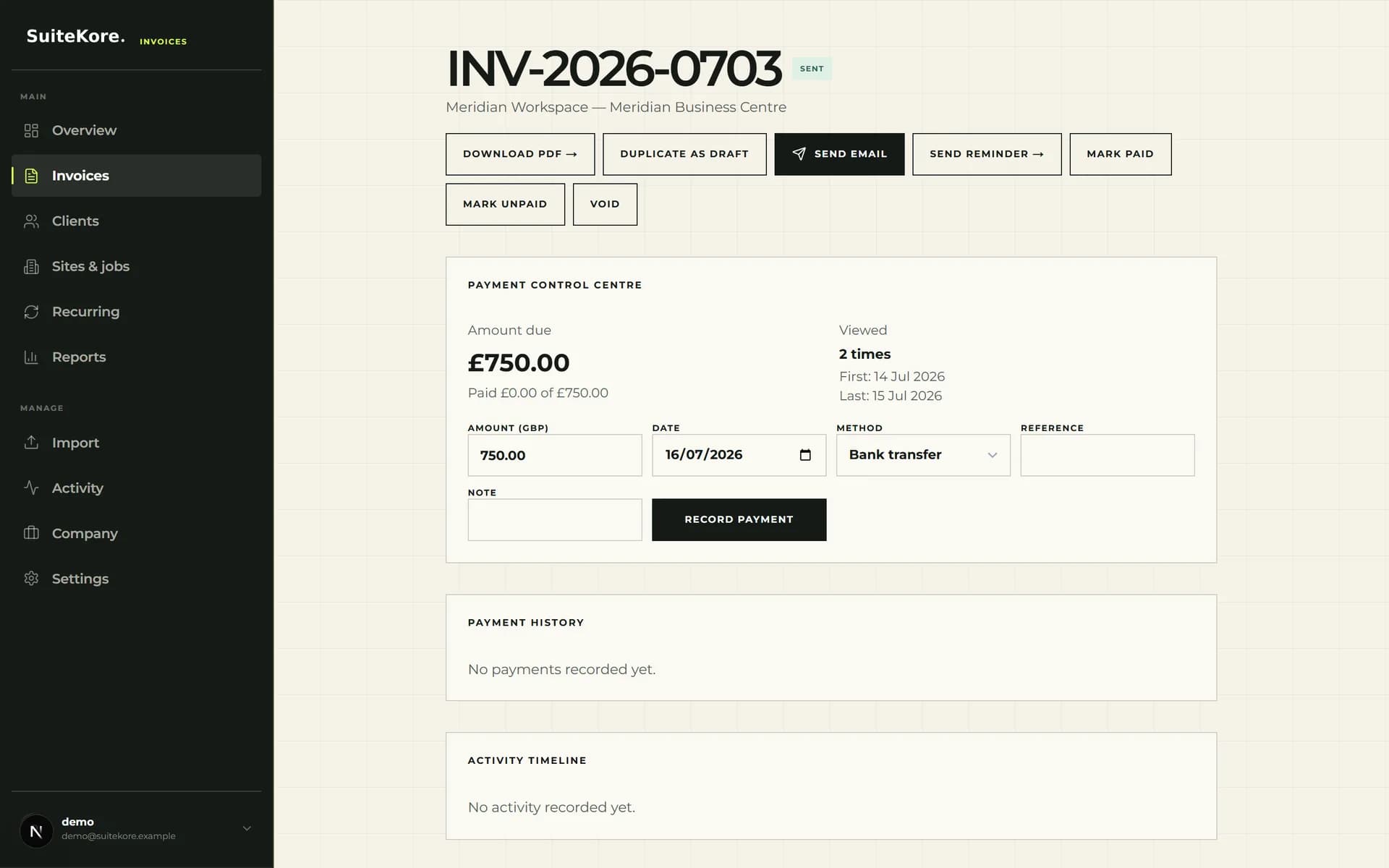
In Suitekore a quote is a document type in its own right, with its own numbering, that a client can accept online. Once accepted, it converts into an invoice carrying the same lines and totals, and that invoice then behaves like any other: it can be sent as a PDF, chased with a reminder and marked as paid against the same record.
When the job changes after the quote
Most disputes about a final invoice are really disputes about work that was never quoted. Price the extra work, get it agreed in writing before you carry it out, and show it as a separate line so the original quoted figure stays recognisable. The guide to invoicing electrical work when the scope changes works through that sequence on a real job.
Once the invoice is out, it needs a state you can act on. The invoice status workflow from draft to paid sets out what to do at each stage, and the complete guide to invoicing for UK service businesses puts the whole sequence together, from agreeing the price to recording the payment.