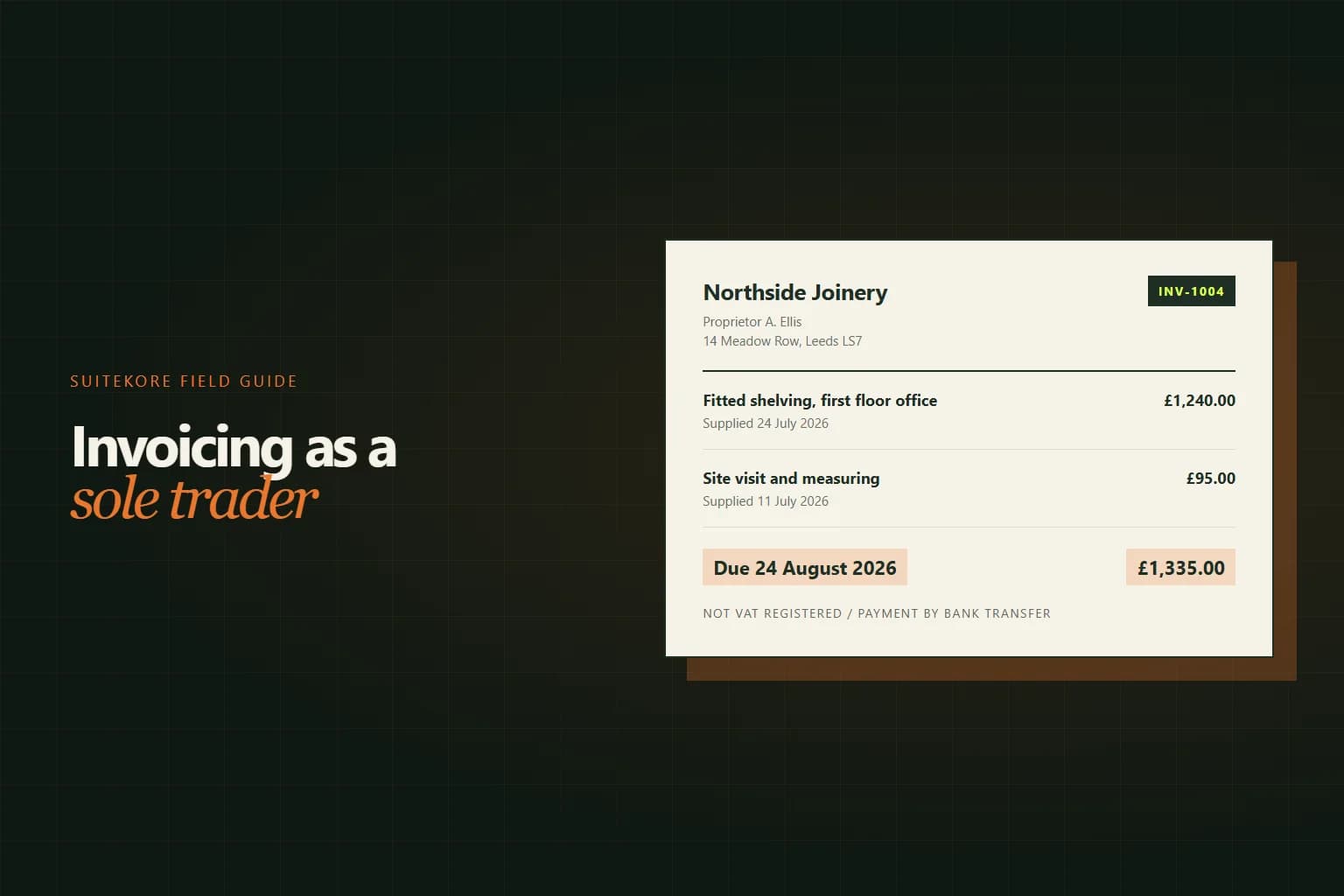
Invoicing as a sole trader is mostly a question of doing a small number of things the same way every time. There is no company registration number to quote and no board to satisfy, but the invoice still has to identify you properly, describe the work clearly and give the customer a due date they can act on. This guide covers what a sole trader invoice has to show in the UK, how to number and phrase it, and what changes once you register for VAT. The free Suitekore invoice generator produces a compliant document without an account.
What a sole trader invoice has to show
The baseline is the same as for any UK business. The document has to be clearly marked as an invoice, carry a unique identifying number, and show your business details, the customer name and address, a clear description of what you are charging for, the date the work was supplied, the invoice date, and the amount owed with any VAT shown separately.
The full breakdown, including the VAT variations, sits in what to include on an invoice in the UK. Everything beyond that list is not a legal requirement but a practical one: payment terms, bank details and a job reference are what turn a correct invoice into a paid one.
Trading name, legal name and address
This is the part sole traders most often get wrong. If you trade under a business name, the invoice has to show your own legal name as well, plus an address in the UK where documents can be served. "Northside Joinery" on its own is not enough. "Northside Joinery, proprietor A. Ellis" with a contact address is.
Set these details once and let every future invoice inherit them. Details typed fresh each time are details that drift, and a customer comparing two of your invoices should not find two different versions of your business.
Numbering from the first job
Invoice numbers have to be unique and should run in sequence without gaps. Starting at 1 is honest but tells a new client exactly how new you are, so many sole traders begin at a round number such as 1001. Either is fine. What matters is that you never reuse a number and never quietly delete one.
Avoid building the number out of the date or the client name. Those schemes look tidy for a year and then collide. A plain running sequence, generated for you rather than typed, removes the whole problem.
Payment terms that actually get paid
State the due date as a calendar date rather than a period. A client reading "30 days" has to work out the date before they can act, and anything they have to work out is something they can postpone. Show the payment methods you accept and everything needed to use them, which for a bank transfer means account name, sort code, account number and the reference you want quoted.
Sole traders are also entitled to charge statutory interest and a fixed recovery cost on commercial invoices paid late, which is worth knowing about even if you rarely use it. The guide to dealing with late payment covers how to escalate without damaging the relationship.
What changes when you register for VAT
Below the registration threshold you do not charge VAT and your invoices show a single total. Once registered, every invoice becomes a VAT invoice: it needs your VAT registration number, the tax point where it differs from the invoice date, and the rate and VAT amount for each line, with the total VAT shown in sterling. Thresholds and rates change, so confirm the current position on GOV.UK or with an accountant before relying on any summary, including this one.
The full picture, including what a tax point is and where simplified invoices apply, is in VAT invoices and what changes when you register.
Registering also changes the shape of your pricing conversations, because a quoted figure now has to say whether it includes VAT. The difference between the two documents is covered in quote vs invoice.
Records, Self Assessment and repeat work
Keep a copy of every invoice you issue, along with the payment that settled it. Self Assessment records generally have to be kept for at least five years after the 31 January deadline for the relevant tax year, and VAT records for six years once you are registered. A folder of PDFs satisfies the rule but tells you nothing in January about who still owes you money.
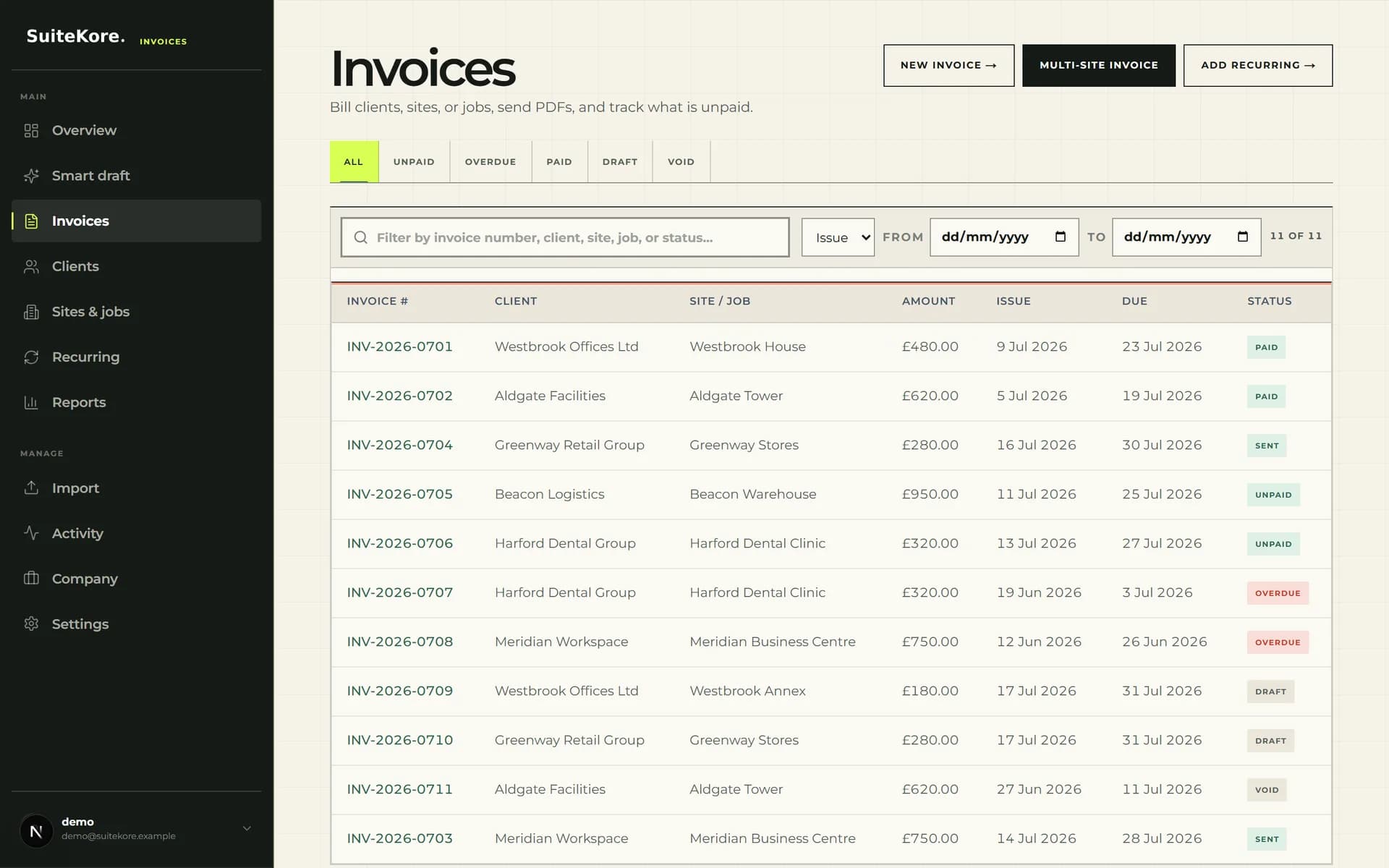
That gap matters most for repeat work. If you bill the same customers each month, rebuilding the same invoice by hand is both the slowest part of the month and the easiest place to make a mistake. Setting up recurring payments for a small business removes the repetition, and the complete guide to invoicing for UK service businesses covers the whole process from agreed price through to recorded payment.